
Firearm Care & Gunsmithing Notes
Common 1911 Feeding Problems and What They Can Mean
A systematic look at 1911 feeding malfunctions — magazines, feed ramps, extractor tension, recoil springs, ammunition, and three-point jams — and why the fix is almost never grinding on the feed ramp.
Why feeding problems are rarely simple
The 1911 is a famously reliable pistol, but it relies on a precise mechanical system where all parts must work in perfect harmony. When a 1911 develops feeding problems, the cause is not always obvious. The ammunition may be blamed first, but the real issue could involve the magazine, extractor, feed ramp, barrel throat, recoil spring, or a combination of several small problems.
Understanding exactly how the malfunction occurs is the first step toward a precise diagnosis.
Failure to feed
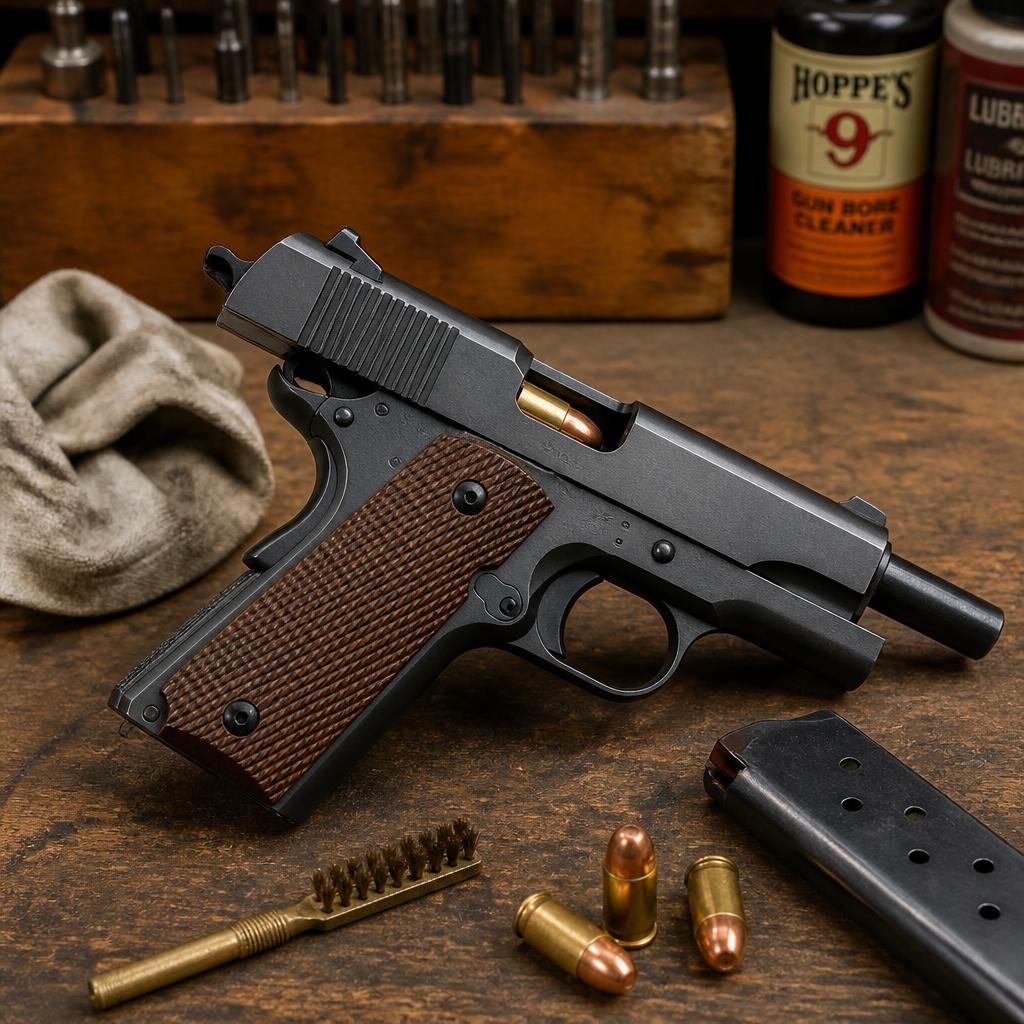
A failure to feed happens when the slide moves forward but the cartridge does not fully enter the chamber. The round may stop against the frame feed ramp, become wedged between the slide and barrel, or enter the chamber partway and stop before the slide reaches battery.
Possible causes include a worn, dirty, or improperly fitted magazine; weak magazine springs that fail to time the next round properly; spread or incorrect feed-lip geometry that changes the release angle; ammunition that is too long, too short, or has an improper taper crimp; a dirty chamber, fouled breech face, or insufficient lubrication; an incorrect, worn, or overly heavy recoil spring; excessive extractor tension or a sharp edge on the extractor hook; and internal timing problems, frame feed ramp flaws, or barrel throat defects.
The position of the cartridge during the malfunction provides important clues. A round that stops low against the feed ramp usually points toward a magazine or ammunition geometry issue. A round that begins entering the chamber but stops at a sharp upward angle often indicates extractor tension, breech-face roughness, or barrel timing problems.
The magazine is often the first place to look
The magazine controls the height, angle, and timing of the cartridge as it is released toward the chamber. A worn or poorly designed magazine can create feeding problems even when the pistol itself is functioning perfectly.
When diagnosing a feeding problem, the first variable to isolate is whether it happens with every magazine or only one. If the malfunction occurs with only a specific magazine, that component becomes the primary suspect. Weak springs, damaged followers, spread feed lips, or incorrect feed-lip geometry can all change how the cartridge is presented to the chamber. Replacing or testing the pistol with a known, high-quality magazine is one of the simplest and most effective diagnostic steps.
Feed ramp and barrel throat problems
The frame feed ramp and barrel throat help guide the cartridge smoothly into the chamber. These surfaces should be smooth and correctly shaped, but they should never automatically be ground or polished simply because a feeding problem exists.
A rough surface can sometimes interfere with feeding, but polishing the feed ramp will not correct a bad magazine, incorrect ammunition or bullet setback, improper extractor tension, incorrect barrel timing, or an out-of-spec frame or barrel.
Removing too much material from a 1911 feed ramp can easily ruin a frame. The specific angle, depth, and the critical 1/32-inch gap between the top of the frame ramp and the barrel throat must be maintained. Once too much metal has been removed or the ramp angle is altered, the repair becomes difficult or impossible without replacing major components. A feed ramp should therefore be inspected and measured by a professional before any metal is removed.
Three-point jams
A three-point jam occurs when the cartridge, barrel, and slide bind together simultaneously as the round attempts to enter the chamber. The cartridge may appear to be nearly chambered, but the slide stops hard before reaching full battery.
This type of malfunction can involve improper barrel timing or link dimensions, insufficient clearance between the barrel and slide, altered feed-ramp or barrel-throat geometry, excessive extractor tension resisting the case rim, or out-of-spec ammunition dimensions and bullet setback.
A three-point jam is a prime example of why simply polishing a feed ramp rarely solves deep-seated mechanical issues. The cartridge is making contact in several places at once, and the root cause usually involves the way the barrel links down and moves during the feeding cycle.
Extractor tension
The extractor does more than remove the fired case from the chamber; it acts as a primary guide during the feeding cycle. As the slide pushes the cartridge forward, the case rim must slide smoothly upward underneath the extractor hook.
If the extractor has too much tension — or if the bottom corner of the hook is too sharp — the cartridge rim will bind. This causes the round to stop partway into the chamber or prevents the slide from going fully into battery. Conversely, if the extractor has too little tension, the pistol may feed reliably but will experience failure to extract or erratic ejection later. Extractor tension and hook geometry must be checked carefully; bending or filing an extractor without precise gauges can quickly induce severe reliability problems.
Recoil spring problems
The recoil spring controls slide velocity and supplies the necessary force to return the slide forward into battery. A spring that is worn, kinked, or underpowered can contribute to feeding problems.
However, installing a heavier recoil spring is rarely the correct solution to a feeding issue. An excessively heavy spring merely forces the slide forward harder, masking the actual mechanical malfunction while placing unnecessary stress on the slide stop, barrel links, and frame. The correct spring weight depends entirely on the pistol's frame configuration, ammunition power factor, slide weight, and intended use.
Ammunition can make a difference
Not all ammunition shares the same bullet profile, overall length, case rim dimensions, or power level. Some 1911 pistols will feed nearly any projectile profile, while others are highly sensitive to specific hollow points, flat-nose bullets, or lightly loaded target ammunition.
When diagnosing a feeding issue, always test the pistol using high-quality, factory-loaded full metal jacket ammunition of the correct caliber to establish a baseline. Inspect your ammunition for damaged cases, unusual bullet seating, or an insufficient taper crimp. If a bullet is loose in the case, hitting the feed ramp can push the bullet back into the brass — bullet setback — immediately causing a severe jam.
Dirt and lack of lubrication
The 1911 operates with several closely fitted, reciprocating metal components. Carbon buildup, dried lubricant, unburnt powder, and metal fouling will slow down slide velocity and prevent the barrel from linking up freely.
A pistol that begins malfunctioning after several hundred rounds may simply need proper maintenance. The chamber, breech face, extractor tunnel, frame rails, and barrel lugs should all be inspected. The 1911 platform generally operates best when run with a generous amount of high-quality firearm lubricant rather than being run dry.
Do not diagnose the problem from one malfunction
A single feeding hitch does not automatically mean the pistol requires gunsmithing work. It may be an isolated ammunition defect, an improperly seated magazine, or a temporary shooting error such as riding the slide or limp-wristing.
To find the true cause, ask a few diagnostic questions. Does the malfunction happen repeatedly? Does it happen with every magazine, or just one? Does it happen with different ammunition brands and profiles? Where exactly does the cartridge stop? Is the pistol clean and properly lubricated? Has any part recently been changed or modified?
Photographs of the exact jam before clearing it are incredibly valuable for a gunsmith. The precise position of the cartridge, slide, barrel, and extractor hook provides immediate clues that disappear the moment the round is cleared from the action.
Our diagnostic approach at Clear Creek Tactical
Feeding problems in a 1911 should always be diagnosed systematically instead of immediately replacing parts or removing metal. The magazine, ammunition, extractor, recoil spring, feed ramp, barrel throat, chamber, and barrel timing all play a part in a successful feeding cycle.
At Clear Creek Tactical, we approach feeding problems under our Care Notes philosophy: we examine exactly how the malfunction occurs and then isolate the most likely mechanical causes one variable at a time. The goal is not simply to force the pistol to feed a single magazine of ammunition. The goal is to identify the root cause and restore dependable, lifelong operation without making unnecessary or destructive changes to your firearm.
A critical safety reminder
If your 1911 experiences a repeated feeding problem, never force the slide closed by hitting the back of the slide. Forcing a stuck live round into an obstructed or tight chamber can cause a catastrophic out-of-battery detonation, destroying the firearm and causing severe injury. Stop cycling the weapon, clear the live ammunition safely, and have the pistol, magazines, and ammunition inspected by a professional.
Clear Creek Tactical provides 1911-focused gunsmithing, firearm cleaning, and inspection by appointment from our Poolville home shop, serving Weatherford, Hudson Oaks, Willow Park, Aledo, Brock, Boyd, Springtown, Bridgeport, and the surrounding Parker County and North Texas area.